
How to Convert More Free Trials without Hiring an Expensive Sales Team
The key to earning money with your SaaS is to make your users reach the AHA moment. Here is how you do this, using an example.

I was randomly scrolling Product Hunt the other day, looking for something interesting.
Then something caught my eye: “Guideflow - The AI demo automation platform for SaaS”
I clicked and went straight to their website, as I’m a huge fan of what they offer.
Guideflow helps SaaS companies build interactive demos, allowing them to embed those demos directly on their own websites. With this, your users have already tested your tool before ever signing up.
Super smart.
After looking at their website, I started thinking: how would I build their growth system to make sure nothing falls apart when they scale?
That’s what I break down today.
The Homepage (And What Could Be Improved)
Let’s start at the entry to Guideflow’s solution.
I ignored everything else and focused on what happens above the fold on their website.
Here’s what you see when you land:
a headline, a subheadline, and chaos.
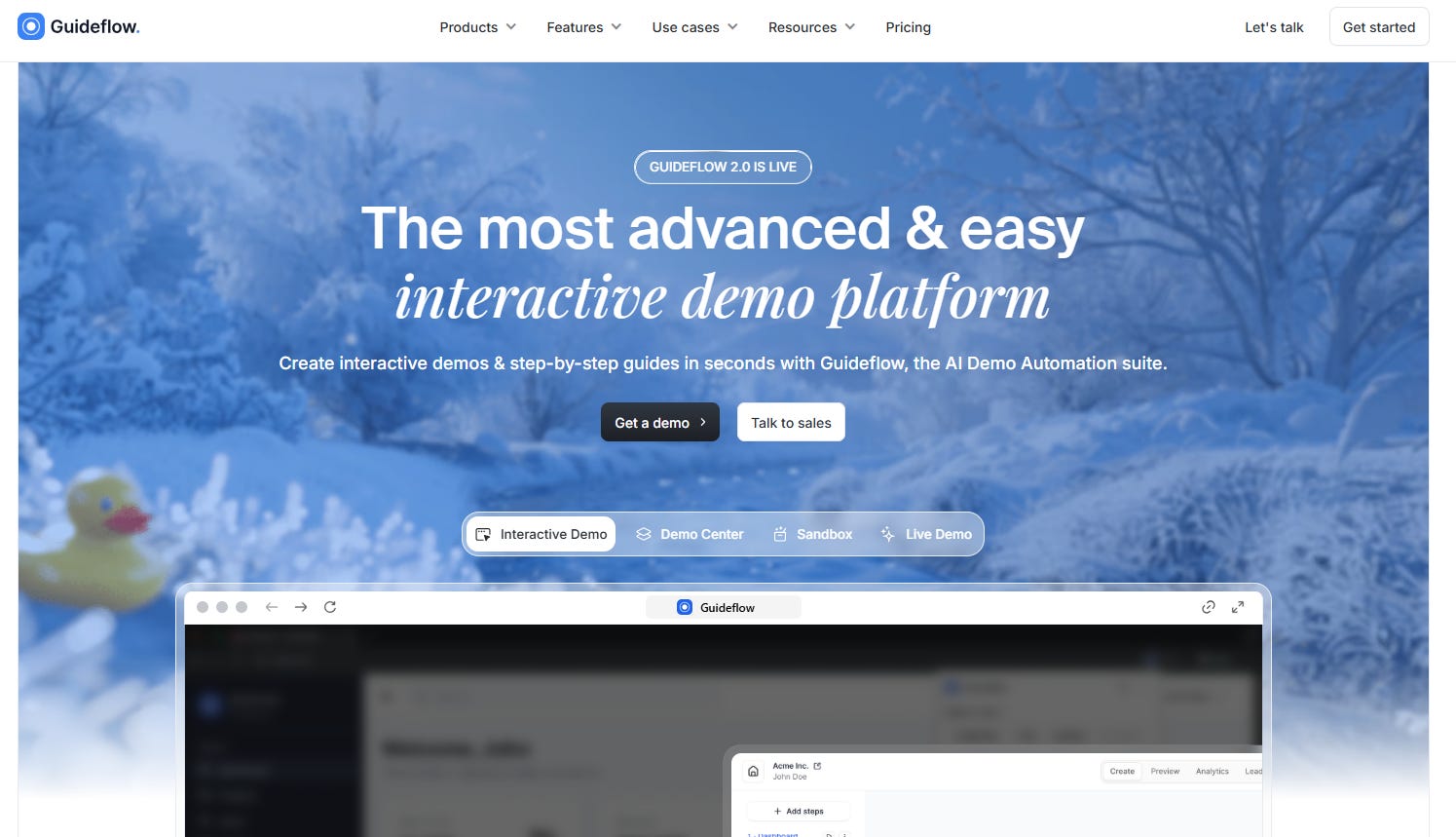
The subheadline is great - crystal clear and explains exactly what you can do. But the main headline just repeats what the tool does.
I’d flip it and use the headline to show the outcome: “Build an interactive demo. Watch your conversion rate climb.” Something like that.
After that is where the chaos begins: there’s the CTA overkill:
Get a demo
Talk to sales
And the demo CTAs:
Interactive demo
Demo center
Sandbox
Live demo
That’s four demo types before I even understand what the tool does.
Look, I get it. They want to showcase possibilities. But at this stage, I don’t know the difference between a demo center and a sandbox. I’d have to scroll down and read more.
Here’s What I’d Do Instead
Two options:
A) Add tooltips next to each option — quick explainer, hover and learn.
B) Reduce it to one option — this is what I’d pick.
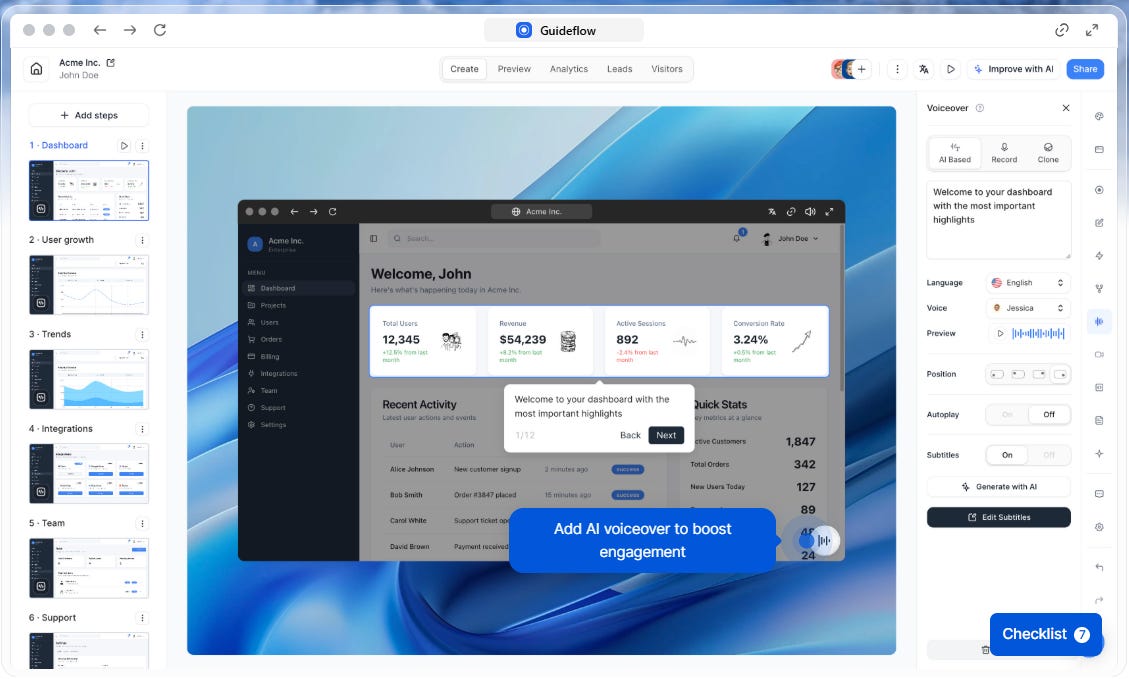
One interactive demo that shows you how to build interactive demos with the tool itself. Meta, but it works.
And they already have this next to all the other options. So simply reduce it.
The rest of the website is pretty clear and I assume it converts pretty strong. But back to our system.
We take the interactive demo I mentioned above as a starting point. So let’s say someone clicks through it because he wants to know what he can do with Guideflow.
And you know what Guideflow does smart here?
The demo is long. Really long. Which means if someone clicks through to the end, they’re hooked.
Almost guaranteed conversion.
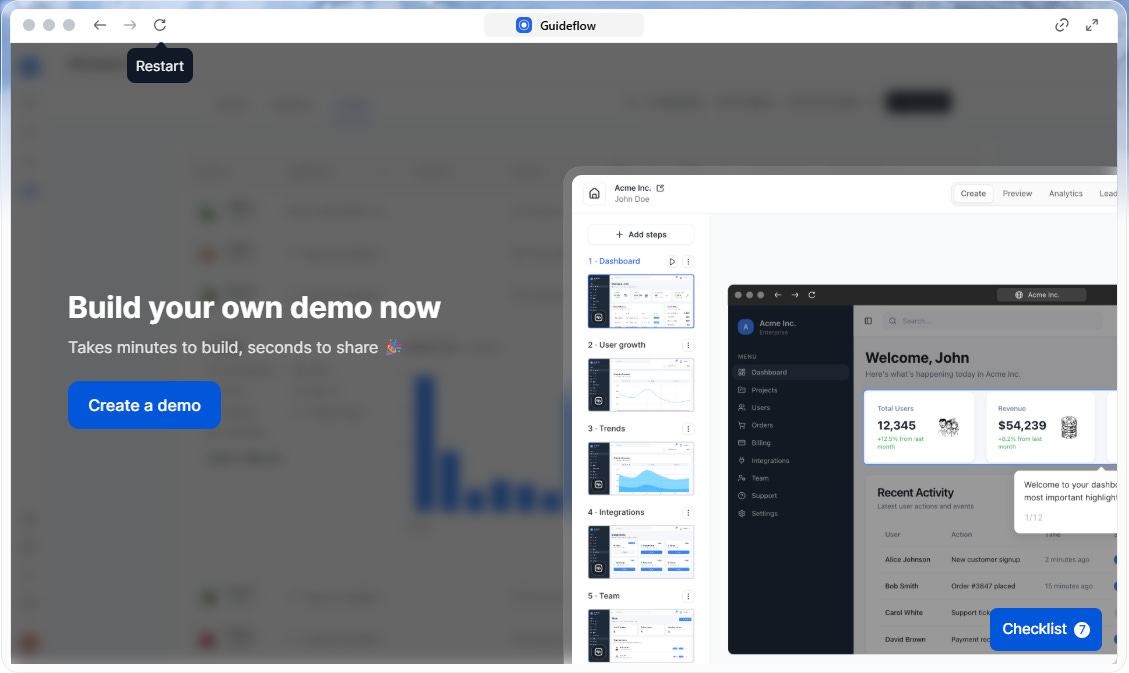
At the end of the demo, there’s a CTA: “Create your own demo” Click it and you’re taken to account creation.
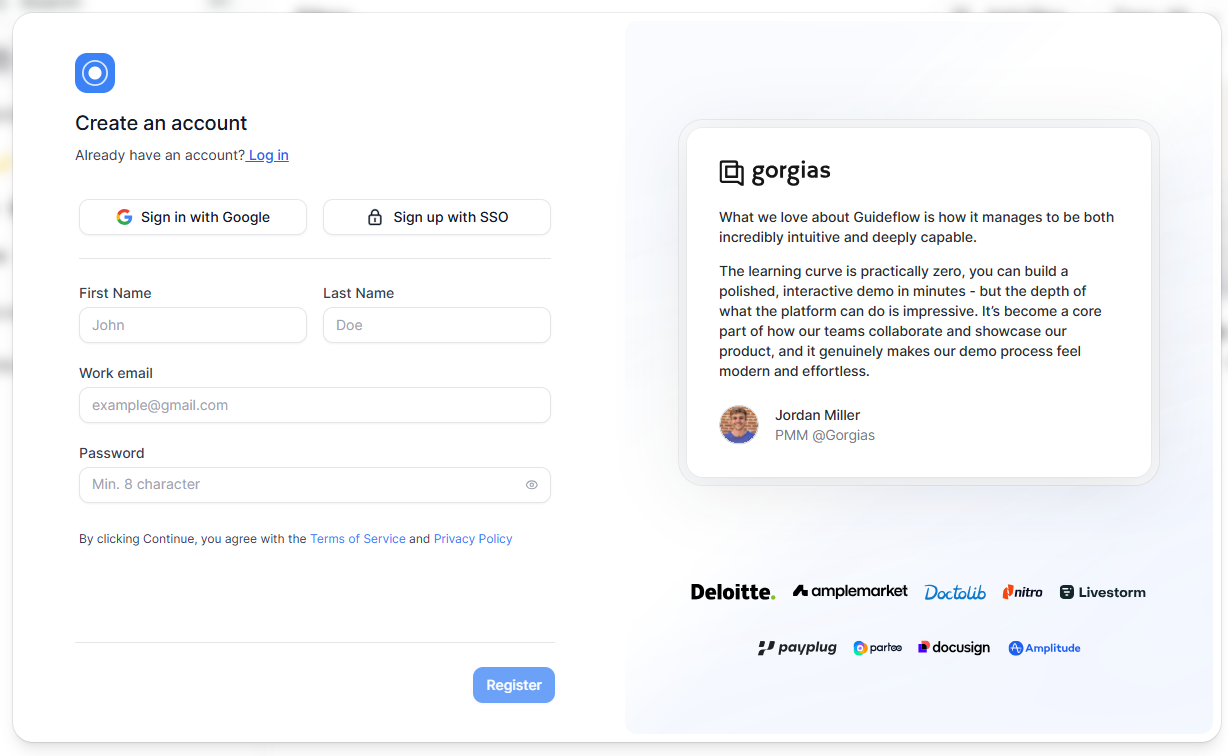
The signup form is clean with social proof right there and name drops of customers. Strong for conversion.
After you sign up, you hit a segmentation flow: company size, what you’re using it for, and some hints about installing the Chrome extension.
Then you land in the product.
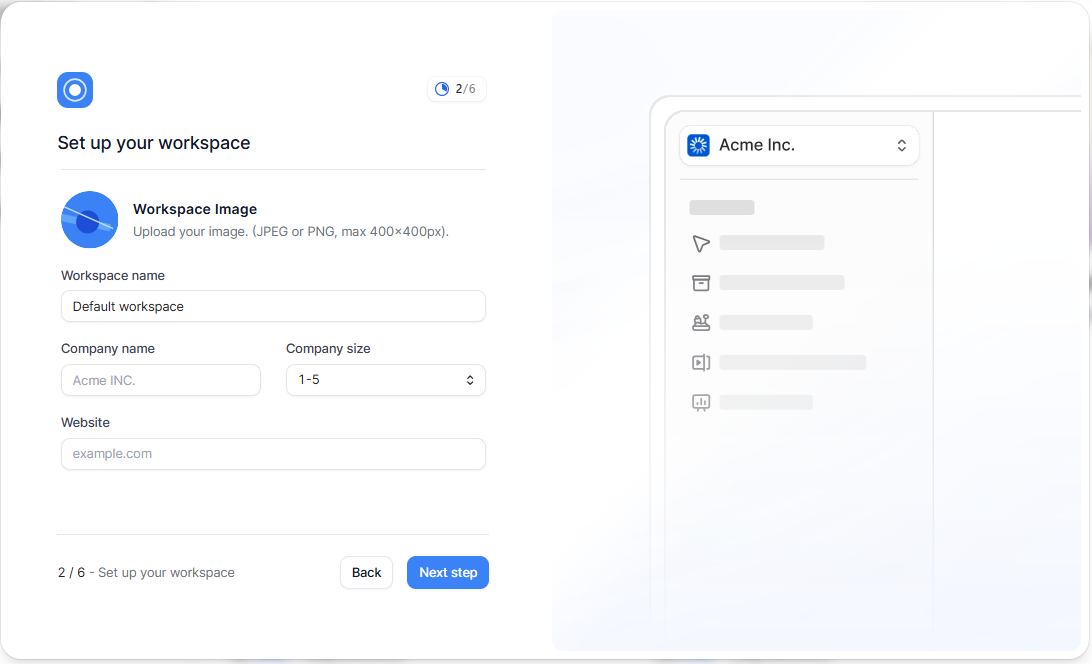
At this point, Guideflow knows: you used the interactive demo, you created an account, your company size, and what you want to use it for.
You’re in the free version.
The goal?
Upsell you. So, what to do now?
How I Would Build Guideflow’s Growth System
Let’s assume everything else is fine. The paid offer is solid, users get value, and product-market fit is there.
It’s “just” about upselling.
First thing I’d do? Track more.
Because in SaaS, it’s all about the AHA moment.
💡 The “aha moment” is the point where a user first experiences the core value of the product - the moment the product’s benefit becomes obvious.
It’s not just activation or onboarding. It’s the instant the user says: “Oh… this is why this product is awesome.”
This is where most SaaS fail nowadays, especially AI tools.
I’ve seen it over and over: A) there is simply no AHA moment because the tools are shit or B) the users aren’t pushed enough to ever reach this moment.
But let’s get back to Guideflow.
I assume the AHA moment here is when someone builds a demo, implements it on their website, and sees how users interact with it and convert.
And until that happens, they’re not ready to buy.
So the first goal for Guideflow is to push users toward the AHA moment.
Lead Scoring First, Pushing Leads Second
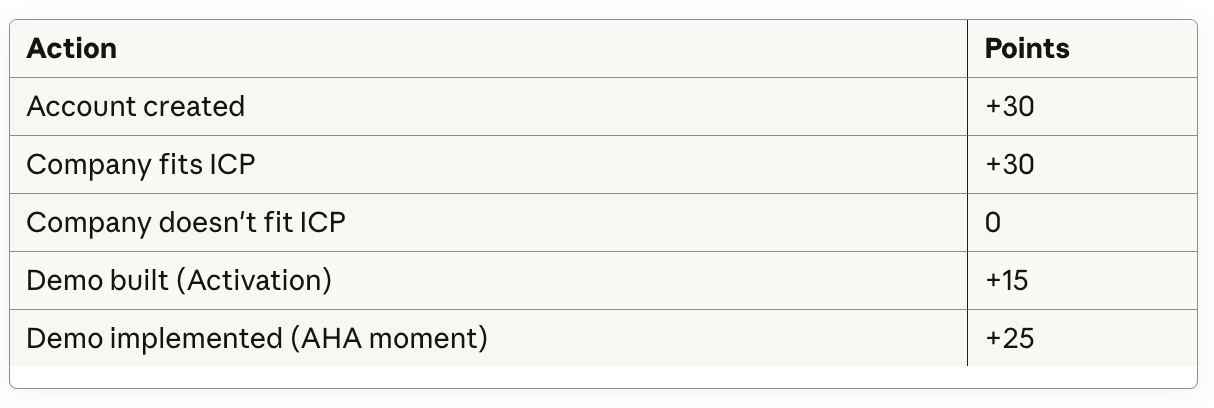
For this, I’d use a scoring system, 0 to 100 (and this is really simplified).
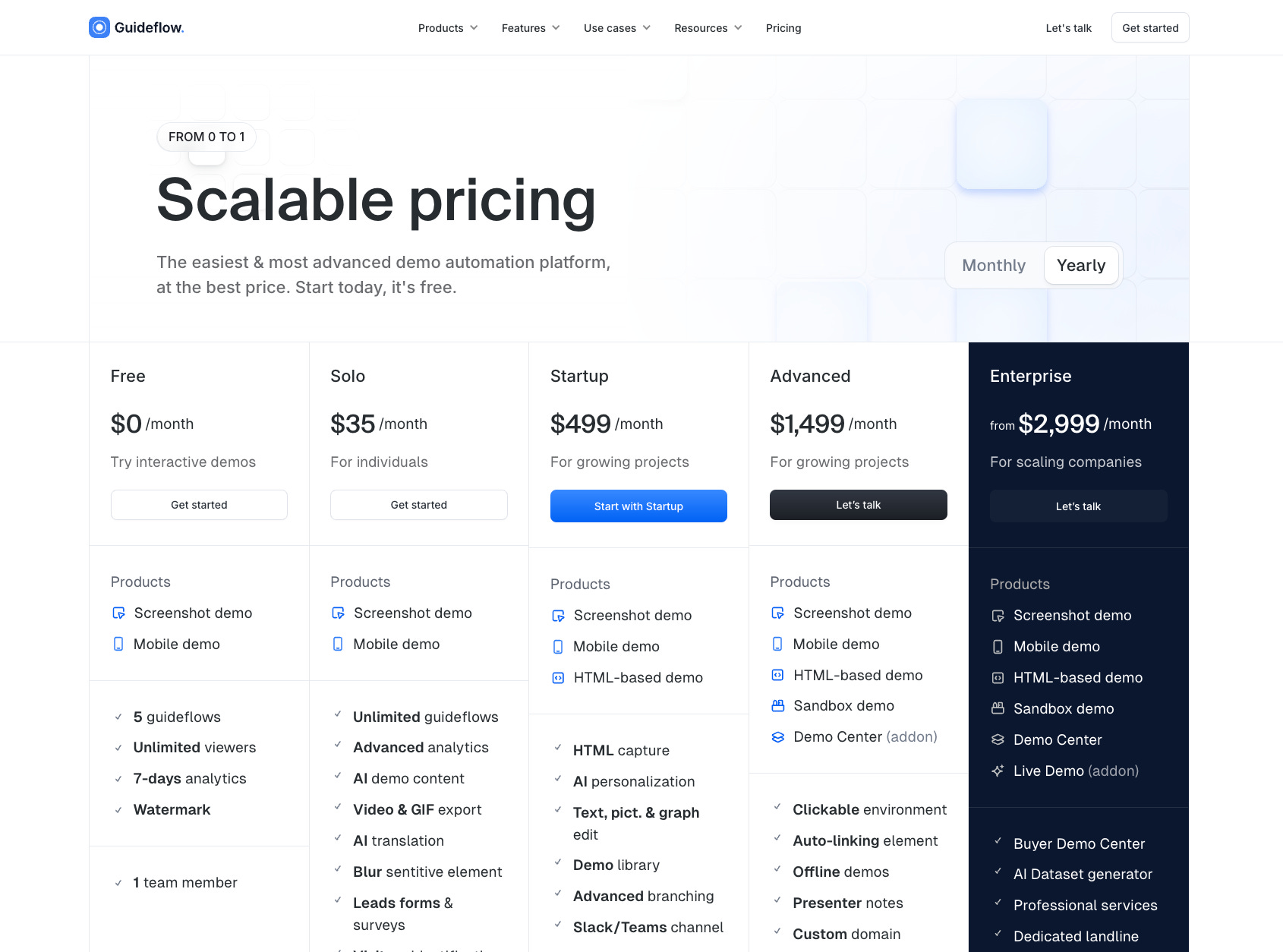
For simplicity, let’s say Guideflow’s ICP is somewhere between enterprise customers and scaling startups (based on a look at their pricing table).
Here’s the scoring I would start with:
That means:
ICP creates an account = 60 points
Non-ICP creates an account = 30 points
ICP builds and implements a demo = 100 points (sales ready)
Non-ICP builds and implements a demo = 70 points
This gives us a clear map of where everyone sits.
Make Them Sales Ready
Now we can build nurture flows based on scoring.
Four workflows:
ICP created account, but no demo built = 60 points → Goal: bring them to 75 points
ICP created account and built demo, but didn’t implement it = 75 points → Goal: bring them to 100 points
Non-ICP created account, but no demo built = 30 points → Goal: bring them to 45 points
Non-ICP created account and demo, but didn’t implement it = 45 points → Goal: bring them to 70 points
Start nurturing with regular emails, a few days between each one in the beginning, and push them based on behavior.
Example emails:
“Hey, you created an account. Here’s how to build your first demo in 5 minutes.”
“You built a demo. Nice. Now let’s get it live on your site.”
“Your demo is live. Here’s what to track to see results.”
…
If they don’t increase their points after 30 days, disqualify them and start a requalification campaign later.
Now let’s say we pushed a decent number of users to the AHA moment. Lead scores increased and we’ve got a pool of perfectly scored users. Time to upsell.
How to Upsell
100 points and above:
Route directly to sales with personal outreach and calls. Sales has all the info: where they came from, company size, what they want to use the tool for, and how sales-ready they are.
Why sales here? Because you’re fighting with limited resources, you channel them where the most money is made. The most promising leads go to sales.
If sales don’t convert them, either disqualify or push back into sales nurturing.
70 points (non-ICP):
Not worth sales effort. There’s decent money here, but not enough to justify sales time.
Goal: direct conversion and self-upgrade.
Go all-in on email nurturing and ad retargeting.
Build sequences with case studies, testimonials, and success stories - everything personalized and tailored based on segmentation.
That’s why Guideflow asks “How do you plan to use it?” in the beginning. Use that data.
To make this efficient, add more complexity to scoring by subtracting points if someone doesn’t open emails or click links. This way you get perfectly qualified leads and significantly increase self-upselling.
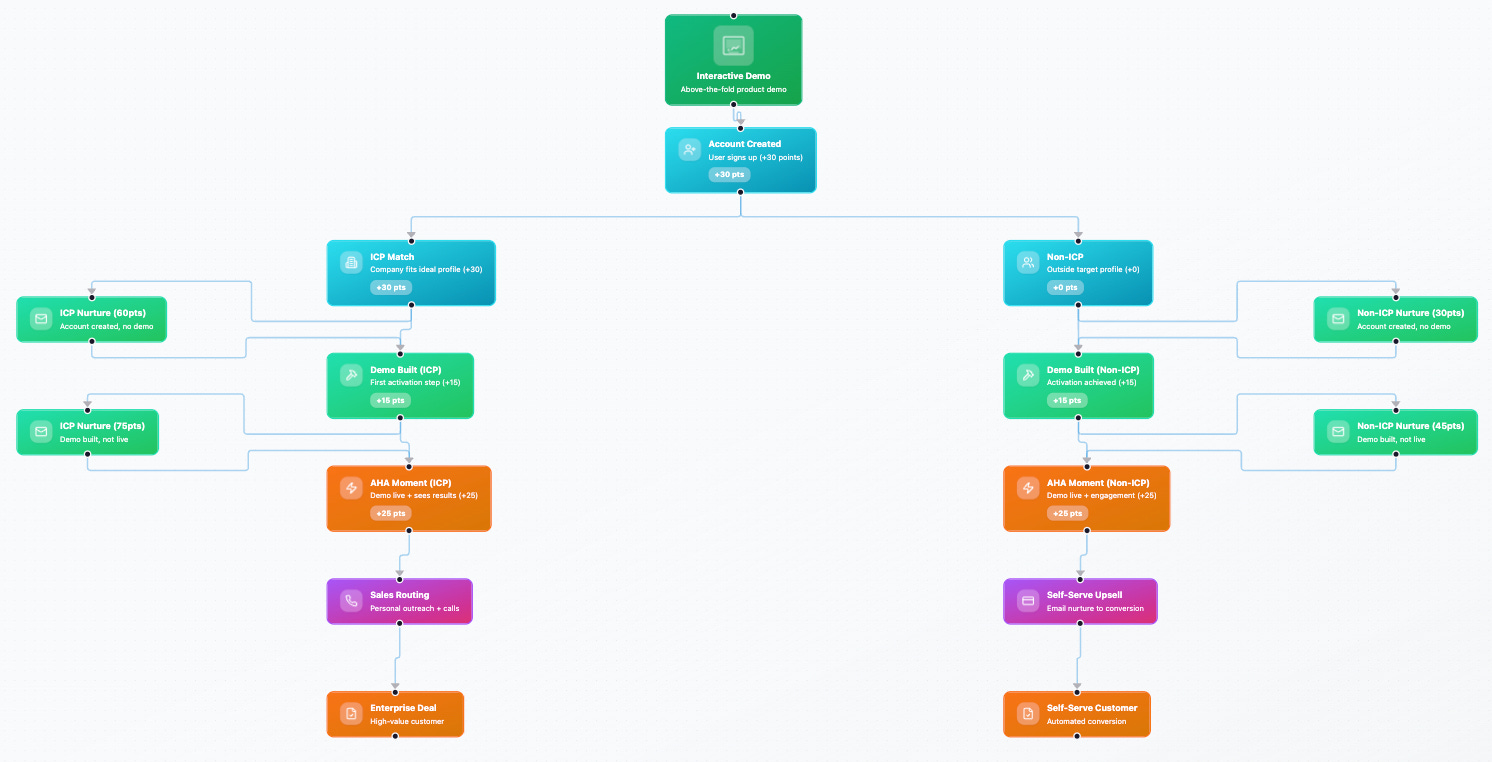
Making the flow look like this:
Last Words
Most SaaS companies throw leads into the product and hope they figure it out.
The difference between companies that scale and companies that stall? Better systems.
And if you have a good product, it’s not that hard.
Push users to the AHA moment, score them based on behavior, and route them where they belong. High-value leads to sales and everyone else to self-serve. Simple.
PS: If you enjoyed this, please tap the like button below. Thank you! 💛
Enjoyed reading this, Andreas! As a CRO, I’m always on the hunt for a different perspective on marketing. Thanks for sharing!
Love this deep-dive, Andreas. And as a content marketer, I agree fully with your insights.
I also noticed the site doesn't capture email addresses. So what happens if prospects leave without signing up for a free account? Effectively, Guideflow is leaking prospects.
They can fix this through a lead magnet in form of:
- A 15-q quiz on "How likely will your customers turn into users?"
- A 5-day Email course on how to create the kind of demo tutorials that increase user retention.
Lead magnets will fuel AHA moments that make free users want to turn into paid ones.